
Few dishes capture the bright, fresh flavors of the Mediterranean quite like a classic Greek salad. Crisp cucumbers, juicy tomatoes, briny olives, creamy feta, and a punchy olive-oil dressing come together in a dish that tastes vibrant, refreshing, and incredibly satisfying.
This quick and easy Mediterranean salad is the kind of recipe you’ll find yourself making again and again. Whether you’re serving it as a light lunch, a colorful side dish, or part of a bigger spread, this Greek salad delivers bold flavor, beautiful texture, and effortless preparation every single time.
Why This Recipe Works Every Time
A great Greek salad is simple—but when the ingredients and balance are right, it becomes unforgettable. Here’s why this version works so well:
- Perfect flavor balance: Fresh vegetables meet salty feta and briny olives, all tied together with bright lemon and olive oil.
- Irresistible texture: Crunchy cucumbers, juicy tomatoes, creamy cheese, and crisp onions create contrast in every bite.
- Quick to make: No cooking required—just chop, toss, and serve in under 15 minutes.
- Budget-friendly ingredients: Simple produce and pantry staples make it affordable and accessible.
- Beginner-friendly: Even if you’re new to cooking, this salad is almost impossible to mess up.
- Meal-prep ready: Holds up surprisingly well for lunches or quick dinners throughout the week.
What You’ll Need
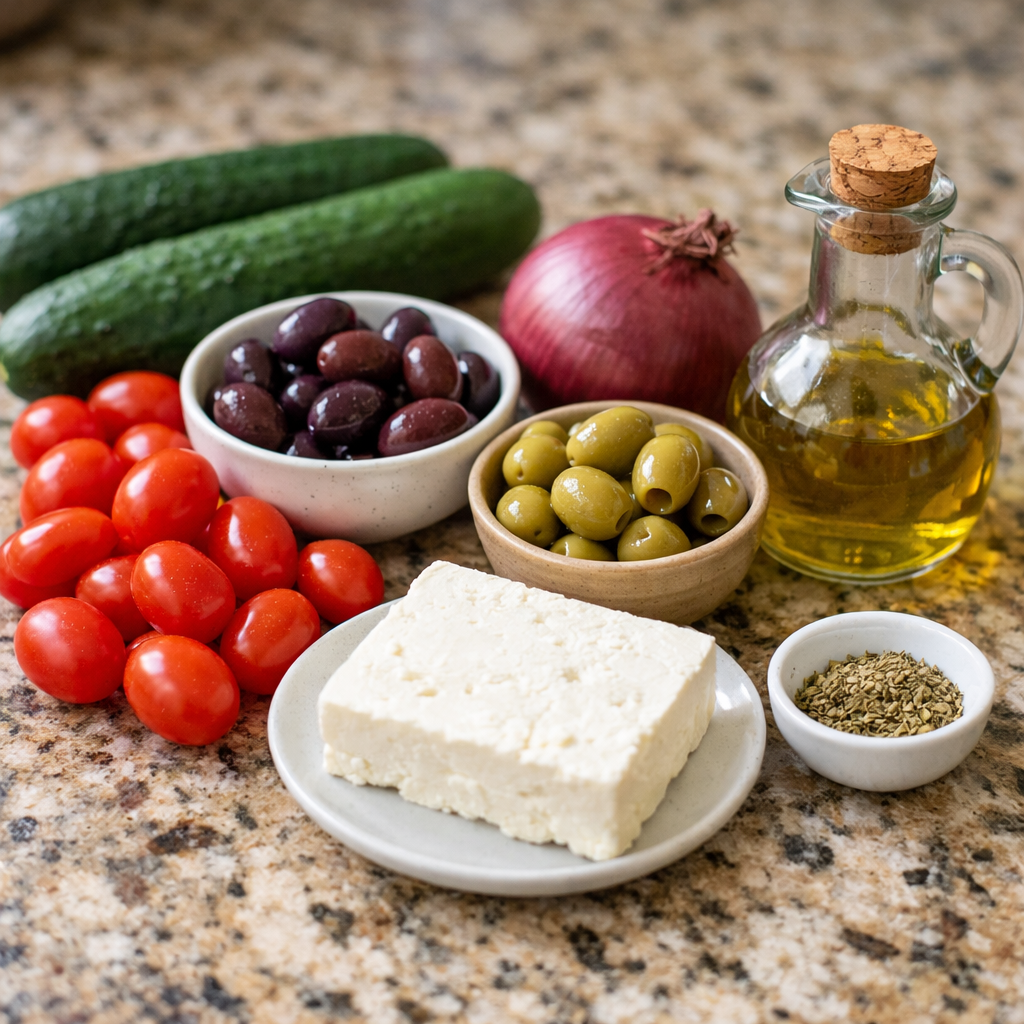
Core Ingredients
These are the traditional ingredients that define a true Greek salad:
- Cucumbers
- Cherry tomatoes
- Red onion
- Kalamata olives
- Feta cheese
- Extra virgin olive oil
- Lemon juice
- Dried oregano
- Salt and black pepper
Flavor Boosters
If you want to elevate the salad even more, try adding:
- Fresh parsley
- Fresh dill
- Cracked black pepper
- Lemon zest
- A splash of red wine vinegar
- Garlic-infused olive oil
Smart Swaps & Add-Ins
You can customize the salad without losing its Mediterranean spirit:
- Swap cucumbers: Persian cucumbers or English cucumbers work best.
- Add protein: Grilled chicken, chickpeas, or tuna make it a meal.
- Extra vegetables: Bell peppers or artichoke hearts add variety.
- Different cheese: Goat cheese or vegan feta can replace traditional feta.
Step-by-Step: From Prep to Plate
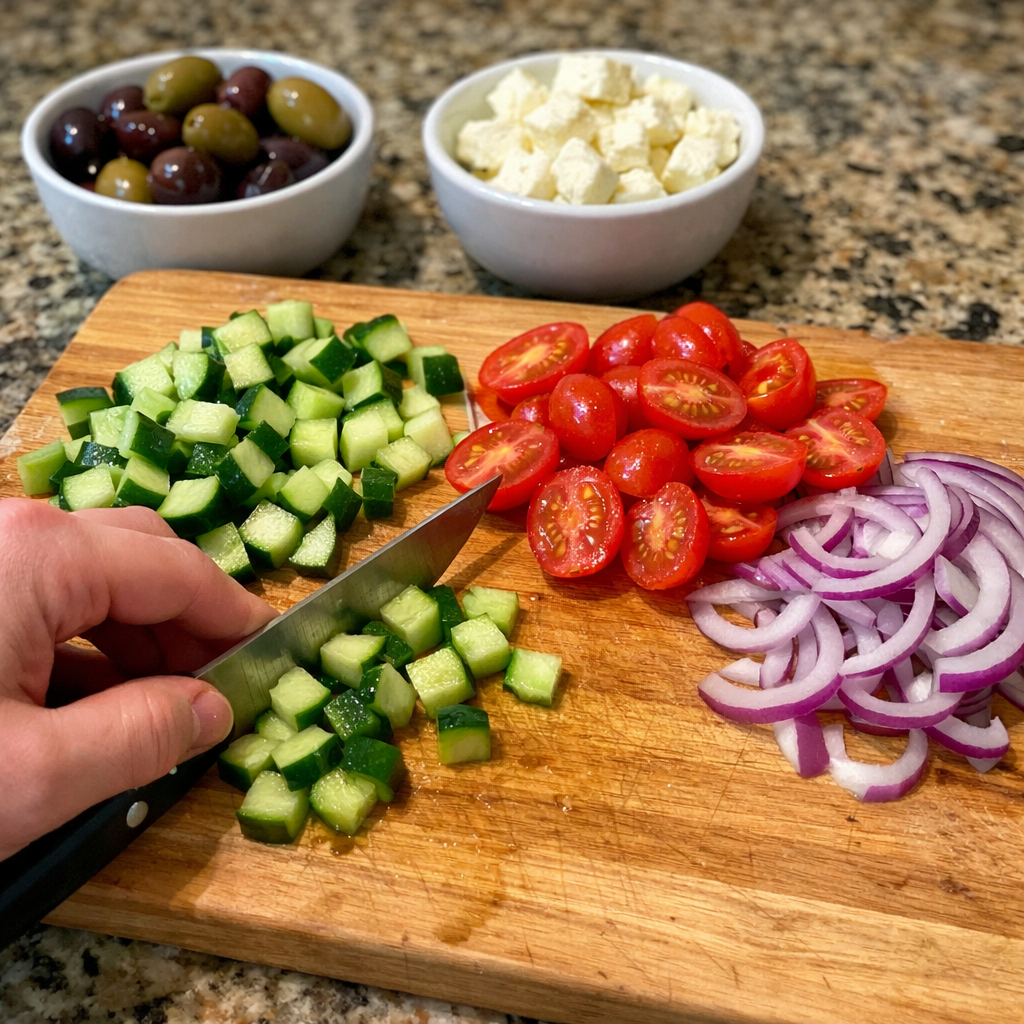
1. Prepare the vegetables
Wash all produce thoroughly. Slice the cucumbers into thick rounds or half-moons. Halve the cherry tomatoes and thinly slice the red onion.
Technique note: Thin onion slices blend better with the salad and prevent overpowering bites.
2. Soak the onions (optional but recommended)
Place sliced onions in cold water for about 5 minutes, then drain.
Technique note: This removes harsh bitterness while keeping the onion flavor.
3. Combine the base ingredients
In a large bowl, add:
- cucumbers
- tomatoes
- drained red onions
- olives
Toss gently to distribute everything evenly.
4. Add the feta
Crumble or cube the feta cheese and sprinkle it over the vegetables.
Technique note: Larger chunks create a more traditional Greek salad texture.
5. Make the dressing
In a small bowl whisk together:
- olive oil
- lemon juice
- oregano
- salt
- black pepper
Taste and adjust seasoning if needed.
6. Toss the salad
Pour the dressing over the salad and gently toss until everything is coated.
7. Finish and serve
Top with a little extra oregano and cracked pepper. Serve immediately.
Quick Visual Cues
- Cucumbers should look bright and crisp, never mushy
- Tomatoes should be juicy but intact
- Feta should stay chunky, not completely mixed in
- Dressing should lightly coat everything without pooling
Pro Tips From a “Made-This-Too-Many-Times” Cook
- Use ripe but firm tomatoes for the best flavor and texture.
- Salt lightly at first—feta and olives already add saltiness.
- High-quality olive oil matters. It’s the backbone of the dressing.
- Cut vegetables evenly so every bite feels balanced.
- Add feta last to prevent it from breaking apart too much.
Serving Ideas That Make It Feel New
Greek salad is versatile and pairs beautifully with many dishes.
Serve it alongside:
- Grilled chicken skewers
- Lamb gyros
- Mediterranean rice bowls
- Roasted potatoes
- Pita bread and hummus
You can also:
- Stuff it into pita pockets
- Add it to grain bowls
- Serve it over quinoa
- Use it as a topping for grilled fish
Variations You’ll Actually Want to Try
1. Healthier Greek Salad
Reduce feta slightly and add more cucumbers and tomatoes for a lighter version.
2. High-Protein Greek Salad
Add grilled chicken, tuna, or chickpeas to turn the salad into a filling meal.
3. Vegan Greek Salad
Replace feta with plant-based feta or marinated tofu cubes.
4. Spicy Greek Salad
Add sliced pepperoncini or a pinch of chili flakes.
5. Kid-Friendly Greek Salad
Reduce onions and olives slightly and add diced avocado for a creamy texture kids often enjoy.
6. Greek Pasta Salad
Toss the salad with cooked and cooled pasta and extra dressing.
Storage, Reheating, and Make-Ahead Game Plan
Greek salad stores surprisingly well with a few adjustments.
Refrigerator storage
Store in an airtight container for up to 3 days.
Best make-ahead method
- Chop vegetables
- Store dressing separately
- Toss everything together just before serving
Meal prep tip
Keep feta and dressing separate until ready to eat for the freshest taste.
Reheating
No reheating required—this salad is best served cold or at room temperature.
Troubleshooting: Common Mistakes and Easy Fixes
Problem: Salad becomes watery
Cause: Overripe tomatoes or too much dressing.
Fix: Use firmer tomatoes and add dressing just before serving.
Problem: Too salty
Cause: Feta and olives together.
Fix: Reduce added salt and balance with extra cucumber.
Problem: Onion flavor too strong
Cause: Raw onion intensity.
Fix: Soak slices in cold water before adding.
Problem: Salad feels bland
Cause: Not enough dressing or seasoning.
Fix: Add a squeeze of lemon and extra oregano.
Ingredient Deep Dive
Cucumbers
Cucumbers add refreshing crunch and hydration to the salad. English or Persian cucumbers are ideal because they have fewer seeds and thinner skins.
Feta Cheese
Authentic feta made from sheep’s milk brings a creamy yet crumbly texture with tangy flavor that defines Greek salad.
Kalamata Olives
These dark purple olives provide rich, briny depth that balances the sweetness of tomatoes and the freshness of cucumber.
FAQs
Can I make Greek salad ahead of time?
Yes. Chop vegetables in advance and store them separately from the dressing and feta until ready to serve.
What kind of olives should I use?
Kalamata olives are traditional, but other Mediterranean olives can work as well.
Do I need lettuce in Greek salad?
No. Authentic Greek salad typically contains no lettuce—just vegetables, olives, feta, and dressing.
Can I use bottled dressing?
You can, but homemade dressing made with olive oil and lemon tastes significantly fresher.
What’s the best feta to use?
Block feta stored in brine has better flavor and texture than pre-crumbled versions.
Final Thoughts
Greek salad proves that simple ingredients can create extraordinary flavor when combined thoughtfully. With crisp vegetables, creamy feta, and bold Mediterranean dressing, this quick and easy salad is endlessly versatile.
Whether served at a summer barbecue, alongside grilled meats, or as a light lunch on its own, Greek salad is one of those timeless recipes that never goes out of style. Once you make it a few times, you’ll likely find yourself returning to it whenever you want something fresh, colorful, and full of flavor.
Print
Greek Salad
- Total Time: 15 minutes
- Yield: 4 servings 1x
- Diet: Vegetarian
Description
This vibrant Greek salad is a quick and easy Mediterranean salad packed with crisp cucumbers, juicy tomatoes, briny olives, and creamy feta cheese. Tossed with olive oil, lemon, and oregano, it’s the perfect refreshing side dish or light meal.
Ingredients
- 2 cups cucumber slices
- 1½ cups cherry tomatoes, halved
- 1/2 red onion, thinly sliced
- 3/4 cup Kalamata olives
- 3/4 cup feta cheese, crumbled
- 3 tbsp extra virgin olive oil
- 1 tbsp fresh lemon juice
- 1 tsp dried oregano
- 1/4 tsp black pepper
- Salt to taste
- 2 tbsp chopped parsley
Instructions
- 1. Wash and slice cucumbers into thick rounds or half-moons
- 2. Halve the cherry tomatoes and thinly slice the red onion
- 3. Place onions in cold water for 5 minutes to mellow the flavor then drain
- 4. Add cucumbers, tomatoes, onions, and olives to a large bowl
- 5. Crumble feta cheese over the vegetables
- 6. Whisk olive oil, lemon juice, oregano, salt, and pepper in a small bowl
- 7. Pour dressing over the salad and toss gently
- 8. Top with parsley and extra oregano then serve immediately
Notes
- Use English or Persian cucumbers for fewer seeds
- Block feta in brine has the best flavor
- Add dressing right before serving to keep vegetables crisp
- A splash of red wine vinegar can enhance the dressing
- Add grilled chicken or chickpeas for a protein boost
- Store leftovers up to 3 days in the refrigerator
- Keep feta separate for meal prep
- Fresh herbs like dill or parsley add extra brightness
- Prep Time: 15 minutes
- Cook Time: 0 minutes
- Category: Salad
- Method: No-Cook
- Cuisine: Mediterranean
Nutrition
- Serving Size: 1 bowl
- Calories: 210
- Sugar: 5g
- Sodium: 480mg
- Fat: 16g
- Saturated Fat: 5g
- Unsaturated Fat: 10g
- Trans Fat: 0g
- Carbohydrates: 10g
- Fiber: 3g
- Protein: 6g
- Cholesterol: 20mg
Keywords: Greek salad, Mediterranean salad, cucumber tomato feta salad